Anthropic Targets Professionals With Claude Duet
A new agentic tool for business users launches in research preview, connecting to thousands of apps to automate complex workflows.
By Kendra Konchanuk ·
More than 6,000 connectors and plug-ins are now available for Anthropic’s newest launch, a figure that underscores the massive infrastructure behind the company’s latest move into the crowded artificial intelligence market. This extensive library of integrations forms the backbone of Claude Duet, an application designed to help professionals and small businesses automate their daily operations. The tool is built on the Claude Opus 5.5 model and represents a significant shift in how the company approaches user engagement. By leveraging such a broad network of connections, Duet aims to position itself not just as a chatbot, but as a functional partner in the digital workplace. This scale of integration is central to its strategy for competing in a sector that sees new entrants almost weekly.
The arrival of Duet marks a specific pivot in Anthropic’s product roadmap. For years, the company has been associated primarily with developer tools and large language models. However, the last several months have seen a rapid acceleration in the release of personal and productivity-based assistants. New platforms like Meta Muse, OpenAI Dots, Hark, Instinct, Grok Bot, and Fo have all launched in recent weeks, creating a fierce competition for user attention. Anthropic is entering this battle now, hoping to carve out a distinct niche before the market consolidates. The timing suggests a belief that the window for capturing business users is currently open.
To understand this launch, one must look at the broader evolution of the industry over the past year. The market has moved beyond simple conversational assistants to agents that can actively work on a user’s behalf. This shift has driven many of Anthropic’s rivals to focus on business use cases. Meta, for instance, released a version of its Muse assistant specifically for small businesses, featuring deep connections to other applications. Similarly, OpenAI’s Dots has taken on a business slant through its integration with professional tools. These moves have set the stage for Duet, which is designed to compete directly in this professional space rather than the consumer market.
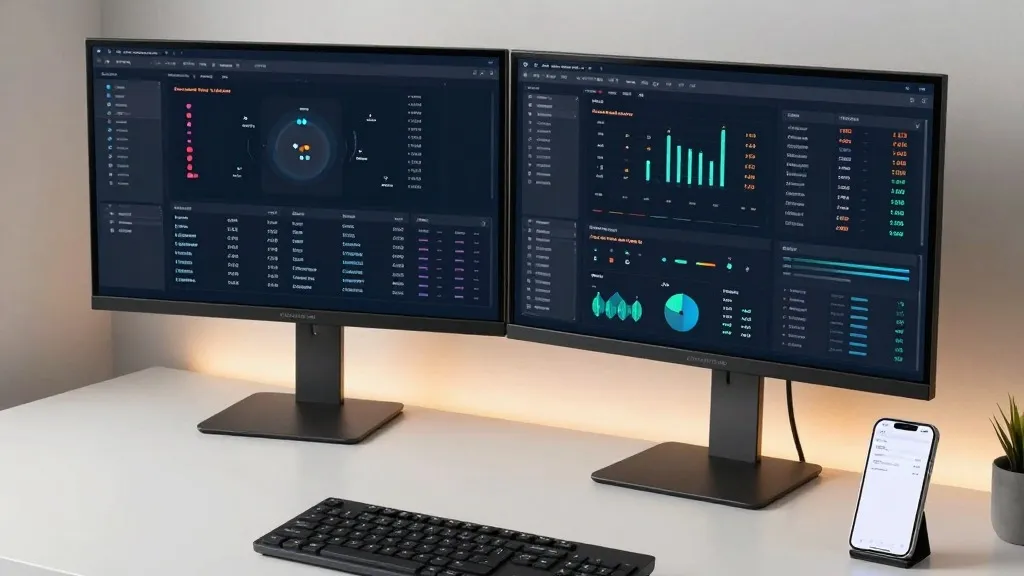
Anthropic has made a clear distinction between Duet and purely personal agents. The company notes that Duet is not optimized for handling errands, booking tickets, or demonstrating its browser usage in real time. Instead, it is tailored for professionals who need to manage complex workflows. The agent can build daily briefings, create data dashboards, and suggest actions based on the user’s existing information. This focus on structured business tasks differentiates it from tools that prioritize casual or personal assistance. The company is betting that professionals will value this specialized approach over a generalist assistant.
The operational mechanics of Duet are designed to minimize user intervention. Like other agents in this category, Duet can complete tasks in the background through its own virtual machine. This allows users to continue with their other work while the agent processes data or executes steps. If the agent encounters a decision point that requires human input, it will pause and ask for approval. This background processing is a key feature, as it aims to reduce the cognitive load on the user. By handling routine tasks autonomously, Duet seeks to free up time for higher-level work.
Proactivity is another defining characteristic of the new application. Anthropic states that Duet monitors ongoing tasks and delivers recommendations as it detects opportunities for improvement or automation. This continuous monitoring allows the agent to stay ahead of potential bottlenecks or inefficiencies in a user’s workflow. The system is built to learn from the user’s data and habits, refining its suggestions over time. This adaptive behavior is intended to make the tool more valuable the longer it is used. It transforms the agent from a reactive tool into a proactive collaborator.
Security and privacy are critical concerns for any tool that handles business data, and Anthropic has addressed these with new safeguards. The company released a new classifier that checks each message to prevent sensitive information from leaking out. By default, Duet will turn down requests that ask for credit card numbers or government identification. This default behavior is designed to protect users from accidentally exposing private data. The company acknowledges the importance of trust, especially as agents gain the ability to take actions on a user’s behalf. These measures are intended to make the tool safe for widespread professional use.
When it comes to financial transactions, Duet offers a middle ground between automation and control. It can make online purchases on behalf of users via Stripe’s Link digital wallet or Shopify’s Shop Pay. However, the company has set clear boundaries to prevent overreach. Duet will not trade securities or move money between bank accounts. Sensitive steps like payments require explicit user approval before they are executed. This hybrid approach allows for convenience in everyday purchases while maintaining a strict control over more complex financial moves. It addresses a common fear among professionals about giving AI agents full financial autonomy.
The path to adoption for Claude Duet is currently gated. The application is available on iOS and Android, as well as on the web through Claude.ai. However, it is restricted to Pro and Max customers who are part of the research preview. Users must join a waitlist to gain access to the tool. This staged rollout allows Anthropic to manage load and gather feedback before a broader release. For New England readers, this means that if you are a subscriber to the higher tiers of Claude, you may soon have the opportunity to test this new agentic workflow. The waitlist system suggests the company is prioritizing stability and user experience over immediate mass adoption.
Source: TechCrunch