32 Banned Nvidia Chips Discovered in Chinese State Network
Israeli security firm Lava reveals how restricted Blackwell Ultra processors slipped into China Telecom's infrastructure, prompting a measured response from the chipmaker.
By Ivan Petrov ·
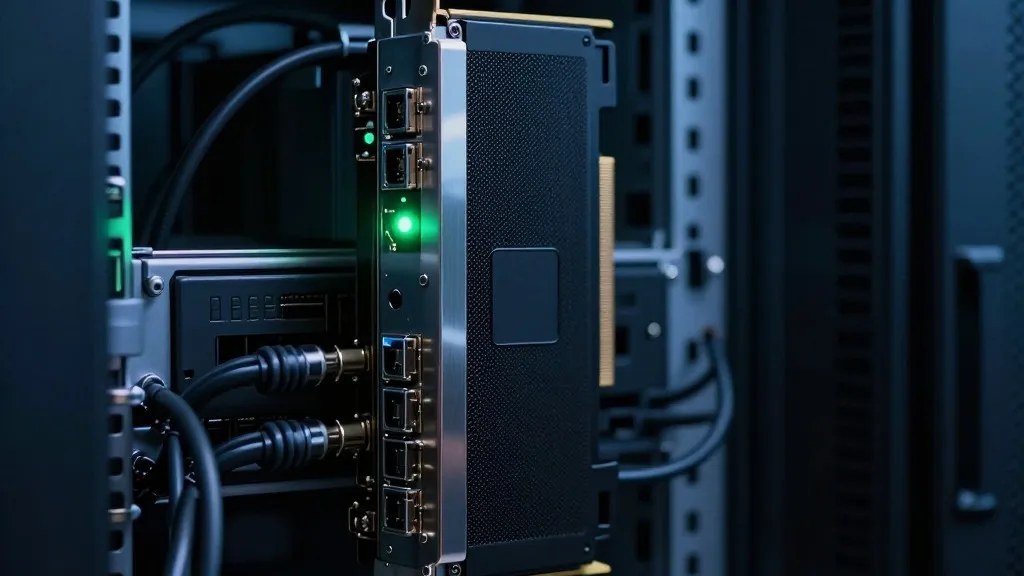
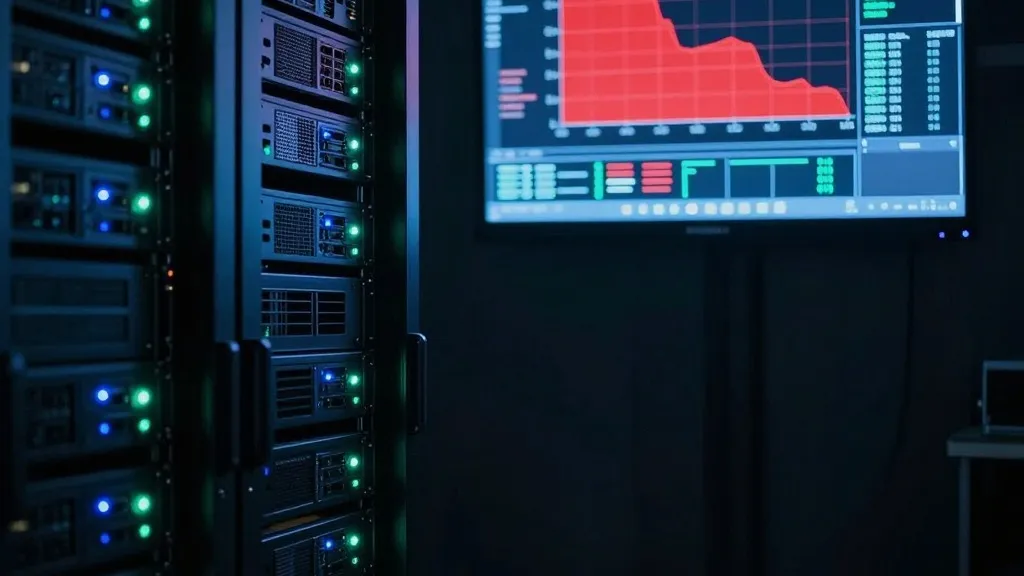
Thirty-two. That is the precise count of Nvidia Blackwell Ultra B300 graphics processing units identified by Israeli security firm Lava within the internal network of China Telecom, a major state-owned telecommunications provider. The discovery highlights a persistent gap in global export controls, as these specific high-performance chips were barred from leaving the United States under recent regulatory frameworks. While the number may seem modest to the average consumer, it represents a significant breach for a sector where every teraflop of compute power is fiercely contested.
The presence of these chips raises immediate questions about how they bypassed strict whitelisting protocols. Typically, such hardware can only be sold to approved buyers who agree not to export the technology to sanctioned entities, including those in China. The fact that these units ended up in a Chinese data center suggests that the chain of custody was broken somewhere between the initial sale and final installation. For New England readers following the tech sector, this underscores the difficulty of controlling the flow of critical hardware in a globalized supply chain.
Nvidia has responded to the findings with characteristic restraint, choosing to downplay the incident rather than dispute the facts. A company spokesperson stated that the diversion of controlled U.S. products has been found to be insignificant in recent legal cases, describing the volume as less than half of one percent. The firm characterized the smuggling issue as 'a drop in the bucket' when compared to the vast amount of domestic computing power China already possesses, emphasizing that with tens of millions of GPUs in service in approved countries, the impact remains a non-factor.
Lava’s team was able to locate the specific chips using Nvidia’s own DCGM Exporter tool, a piece of software designed for data center operators to monitor server health and performance. This tool, while intended for internal use, is often accessible from outside the data center’s secure network and does not always require password authentication. This technical loophole provided the security firm with a clear view into the hardware inventory. Nvidia has acknowledged it is working on a new tool to help locate its chips in the future, though that solution has not yet been released to the public.
The B300 series has become a target of intense interest because of its raw capability. Announced in March of last year, the chip offers substantial performance improvements over its predecessor, the B200, including fifty percent more memory and increased FP4 compute power. Nvidia originally marketed the B300 as being built for the age of reasoning, specifically citing its suitability for sophisticated large language models. As a result, the chip became a highly sought-after asset, with distributors preparing to sell the new series even before it was widely available on the open market.
The broader context of this discovery is one of escalating enforcement and creative smuggling tactics. In August of this year, nine individuals in Taiwan were indicted for the illegal export of B300 GPUs to China. This legal action followed an investigation by Supermicro, which fired several employees after uncovering irregularities in its export processes. The smuggling operation involved a Taiwanese server trading firm with whitelisted status, illustrating how legitimate business relationships can be leveraged to move restricted hardware across borders.
The demand for these advanced chips has created a ripple effect throughout the market. Because newer silicon is so vital to AI data centers, the secondary market for older models has seen dramatic price increases. Nvidia’s A100 servers, which are now five years old, have tripled in value, with some units commanding prices as high as $82,000. This scarcity has even led some operators to retool gaming GPUs to handle AI workloads, a stopgap measure that reflects the high stakes involved in securing compute power.
Looking ahead, the situation suggests that while smuggling may not fundamentally alter the balance of global computing power, it remains a persistent challenge for regulators. The ability to identify specific chips through standard monitoring tools indicates that the hardware is not hidden well, but the volume of trade makes every diversion notable. As the race to deploy advanced AI continues, the scrutiny on how these powerful components move across borders is likely to intensify.
For the tech industry, this incident serves as a reminder that export controls are as much about enforcement as they are about policy. The collaboration between security firms and chipmakers to track hardware locations may become a standard practice in the coming years. Until then, the hunt for stray B300 chips will likely continue, with each discovery serving as a data point in the ongoing debate over the global distribution of computational power.
Source: Tom's Hardware