Warhound Raises $200M for Genetically Engineered Military Dogs
A new venture backed by $200 million aims to clone and enhance working dogs to solve a critical supply shortage for U.S. defense and police agencies.
By Gabriela Flores ·
Warhound has emerged from stealth with a $200 million funding round to develop genetically engineered dogs for the U.S. military and law enforcement. The company is valued at $1.2 billion and secured capital from Sequoia, 8VC, Corner Ventures, and In-Q-Tel, a venture firm supported by U.S. intelligence agencies. This financial boost is intended to accelerate the creation of a new breed of working dogs designed for high-risk operations.
The primary driver for the venture is a significant gap in the domestic supply of working dogs. More than 80% of the U.S. military’s current working dogs are imported from Europe, and fewer than half of those imported animals are deemed fit for service. Warhound seeks to reverse this dependency by engineering dogs with traits specifically suited for demanding missions, such as bomb detection and search operations that are too dangerous for humans or complex for machines.
The biological foundation of the project comes from Colossal Biosciences, which is licensing its technology to the new venture. Ben Lamm of Colossal met Anduril founder Palmer Luckey about a year ago and began researching how working dogs are bred. Lamm noted that many dogs fail training due to inherited issues like poor eyesight, hip dysplasia, or cancer. The team has collected cell lines from top-performing breeds, including Belgian Malinois and German Shepherds, to create a biobank for gene editing.
Anduril will provide the technological hardware and software to support these animals. The company plans to equip the dogs with gear such as protection vests and goggles that offer situational awareness. Lamm described these enhancements as additions that sit on top of the dog rather than inside it. Sensors in the gear will relay data back to handlers, improving coordination and safety during operations. Luckey is a partner in the venture but does not hold equity, while Colossal owns a stake in the business.
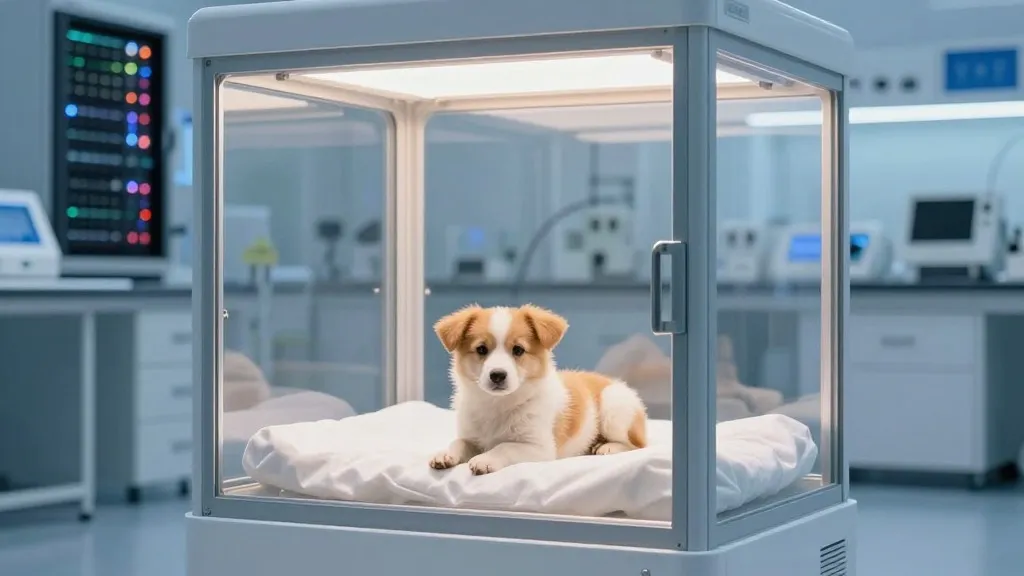
The first batch of dogs is scheduled to be cloned and incubated shortly, with births expected in early 2027. Service entry is targeted for within two years. Viagen, a Colossal-owned entity, will handle the cloning process using technology with a high success rate. The company has not yet set a price for the dogs but expects to sell to the Department of Defense, police forces, and other first responder groups.
Welfare standards are a focal point of the launch. Warhound is working with the American Humane Society to certify its training program. The society aims to ensure the animals are treated humanely and plans to integrate retired dogs into its reunification program for new homes. Lamm stated that each dog will undergo standard military working dog training and be managed by the purchasing agency. The American Humane Society welcomed the partnership, praising the move to include a national humane organization in the development process.
The initiative represents a significant shift in how the U.S. approaches military support animals. By combining advanced gene editing with modern tactical gear, Warhound aims to create animals that are healthier, longer-lived, and more effective than traditional breeds. The project addresses both the logistical challenge of sourcing dogs and the biological challenges of keeping them fit for duty in harsh environments.
Source: TechCrunch