Tesla Activates High-Volume Optimus Line at Fremont to Mass- Produce Humanoid Robots
The automaker has begun producing commercial-grade humanoid units on a former car assembly line, aiming for a one-million-unit annual capacity by leveraging a new internal training academy.
By Rahul Mehta ·
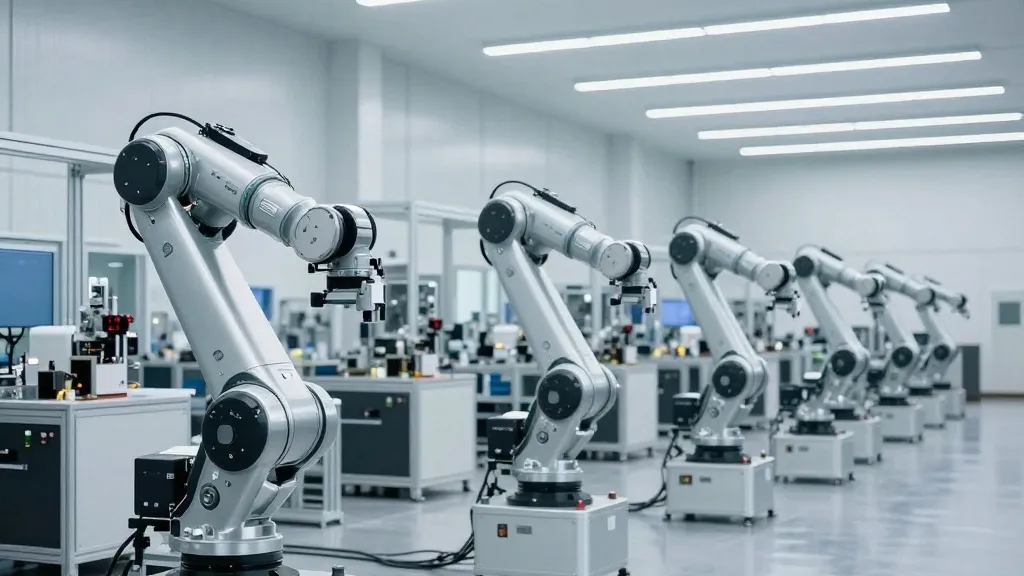
For years, the promise of a general-purpose humanoid robot has hovered in the realm of speculative technology, but Tesla has now moved the project from concept to tangible industrial reality. The company has officially commenced the production of its Optimus robot on a high-volume assembly line located within its Fremont, California facility, marking a distinct shift in how the automaker approaches its hardware roadmap.
According to the third-quarter shareholder letter released this week, Tesla asserts that the units currently rolling off this specific line are the first to meet the rigorous standards required for a genuine commercial product. The company claims it has successfully demonstrated that the current manufacturing process is robust enough to support a product intended for widespread sale, rather than just internal testing or prototype purposes. This declaration serves as a critical milestone, signaling that the engineering phase is transitioning into a phase of scalable production.
The physical transformation of the Fremont plant has been rapid and decisive. The space currently dedicated to Optimus production previously housed the assembly lines for the Model S and Model X vehicles. Tesla cleared out the legacy automotive equipment in just 46 days this spring to make room for robot production infrastructure sized to handle one million units annually. During the Wednesday earnings call, CEO Elon Musk noted that the majority of the necessary equipment for this high capacity is already installed, with output expected to climb toward approximately 20,000 robots per week as the line reaches full operational tempo.
Musk characterized the production ramp-up as following a classic S-curve trajectory, though he cautioned that the initial phase will feature a shallow slope. The engineering team is currently focused on refining the robot’s artificial intelligence, electromechanical design, and overall reliability to ensure a longer service life. These improvements are targeted for completion by the end of next year, at which point Tesla intends to begin delivering Optimus units to external companies for tasks that are dangerous, repetitive, or require around-the-clock operation.
A significant logistical hurdle for any new robot fleet is the acquisition of training data. Unlike Tesla’s automobile fleet, which generates vast amounts of real-world driving data from millions of vehicles, Optimus lacks a comparable existing user base. Musk acknowledged this disparity, noting that the company cannot rely on a pre-existing fleet to gather the necessary information to improve the robots' capabilities.
To address this gap, Tesla is implementing a solution dubbed the Optimus Academy. This internal system will involve 10,000 to 20,000 robots practicing a wide variety of tasks in a controlled environment. The data generated from these practice sessions will be fed back into the model to improve subsequent versions. Consequently, every unit produced on the Fremont line serves a dual purpose: it is a product and a data collection device, creating a feedback loop that aims to accelerate the robot’s learning curve without waiting for external deployment.
Hardware advancements are also slated for the near future. Tesla plans to integrate its next-generation AI5 chip into the Optimus platform next year. Musk indicated that a new video demonstration should be released within one or two months, showing the robot completing tasks driven by AI rather than preprogrammed motions. He contrasted this approach with rival humanoid demonstrations that rely on scripted routines, suggesting that such scripted actions would not hold up to the unpredictability of the real world.
The supply chain is rapidly aligning with Tesla’s aggressive production targets. In September, the company certified Tuopu, Joyson, and Sanhua as mass-production partners for critical Optimus components. Meanwhile, a much larger dedicated Optimus factory is under construction at Giga Texas. Recent drone footage revealed that the steel frame of this new facility is nearing completion, with Musk pegging the long-term target for that plant at 10 million robots per year.
Executives have also indicated that Optimus production costs are trending toward the expected manufacturing costs of the Cybercab, suggesting the robot is being engineered for volume efficiency from the outset. However, the design of the robot's hands remains the most challenging aspect of the engineering process. This point was emphasized by Musk at the X Takeover event earlier this month, and it continues to be the primary focus of current development efforts as the company works to perfect the dexterity required for complex human-like tasks.
Source: Teslarati