Tesla Abandons Vision-Only Dogma to Build Proprietary Maps for FSD
After years of criticizing map-dependent systems, Tesla is developing an AI-driven mapping architecture to resolve persistent navigation errors in its Full Self-Driving software.
By Rafael Ortega ·
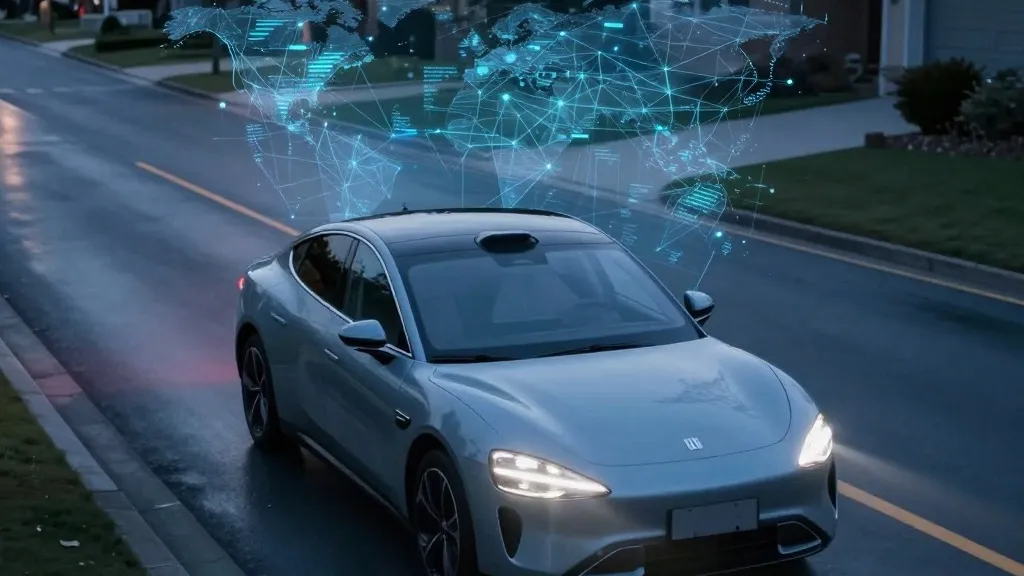
Tesla is fundamentally reversing its long-standing stance on autonomous driving by developing its own proprietary mapping system. The company’s head of AI, Ashok Elluswamy, confirmed during the Q3 2026 earnings call that Tesla is constructing a new AI-based mapping and navigation architecture. This initiative is designed to address persistent issues with the Full Self-Driving (FSD) system, specifically regarding speed limit recognition, parking logic, and route selection. The move marks a significant departure from the company’s previous public messaging, which had heavily criticized reliance on external maps as a sign of brittleness in self-driving technology.
The decision was prompted by direct shareholder feedback during a recent Q&A session. A retail investor highlighted that mapping remains a primary pain point for FSD users, citing speed limits, parking, and standard routes as the most frequent sources of error. In response, Elluswamy acknowledged that Tesla should not depend on third-party data. He explained that the new system will leverage data collected from Tesla’s fleet to create a dynamic map. This infrastructure will also incorporate individual driver preferences and enable voice command responsiveness, moving beyond simple navigation to a more personalized driving experience.
This shift contradicts the narrative established by CEO Elon Musk years ago. In 2019, during Tesla’s Autonomy Day event, Musk dismissed high-precision lane maps as a "huge mistake" that made self-driving systems "extremely brittle." At the time, he argued that Tesla’s vision-based approach, utilizing cameras and AI, was superior to competitors who relied on lidar and detailed maps. By acknowledging the need for a dedicated map layer, Tesla is effectively admitting that its vision-only strategy requires supplemental environmental data to function reliably.
The necessity of this map layer is underscored by recent real-world failures. Last month, a Belgian road safety group reported that FSD vehicles exceeded speed limits in 55% of 30 km/h zones in Brussels, averaging 44 km/h. The error was partly attributed to the vehicle’s display showing an incorrect 50 km/h limit. Similarly, in the United States, the NHTSA is considering an investigation into reports of Tesla Robotaxis speeding through active school zones. These incidents suggest that the current end-to-end vision system struggles with basic environmental cues, such as reading static road signs.
Tesla’s new approach mirrors the operational model of its primary competitor, Waymo. Waymo utilizes its sensor-equipped fleet to create and update high-definition maps for specific service areas. While Tesla’s maps are not yet described as centimeter-level HD maps, the methodology is similar: cars collect data that feeds into a central system to improve driving performance for the entire fleet. This strategy aligns with Tesla’s current Robotaxi operations, which function within small, geofenced service areas rather than on open, unrestricted roads.
The rollout of this new mapping technology is phased. Elluswamy stated that the system will initially handle the start and end of trips with FSD v15. Over the coming months, it is expected to take over broader navigation, parking, and destination management. This incremental approach suggests that Tesla is integrating the new data layer carefully to ensure stability before expanding its utility across the entire driving experience.
The development raises questions about the timeline for unsupervised FSD in consumer vehicles, which is currently targeted for Q2 2027. Critics argue that the need for such a robust mapping infrastructure indicates that the vision-only system is not yet a general solution for all driving conditions. By building its own maps, Tesla is adopting a strategy that closely resembles the map-based methods it previously disparaged, signaling a pragmatic shift toward the technologies that have proven effective in other driverless programs.
Source: Electrek